

Written by Junior Tadiffo, Open Mainframe Project Summer Mentorship 2026, mentee researcher, guided by mentor Bruno Azenha & Swathi Rao
If you’re reading this:
It’s not too late… My Open Mainframe Project Summer Mentorship came to an end
I have always envisioned myself becoming a Solutions Architect. It is a long-term objective as I navigate my soon-to-begin career in tech and enterprise computing. Both leaders and Solutions Architects must take a plethora of factors into consideration when making strategic decisions, one of which is owning their digital future and building resilience. For one summer, I had the opportunity to put myself in their shoes as I wrote this paper analyzing how the mainframe can help organizations and regulatory bodies like the EU achieve digital sovereignty and resilience.
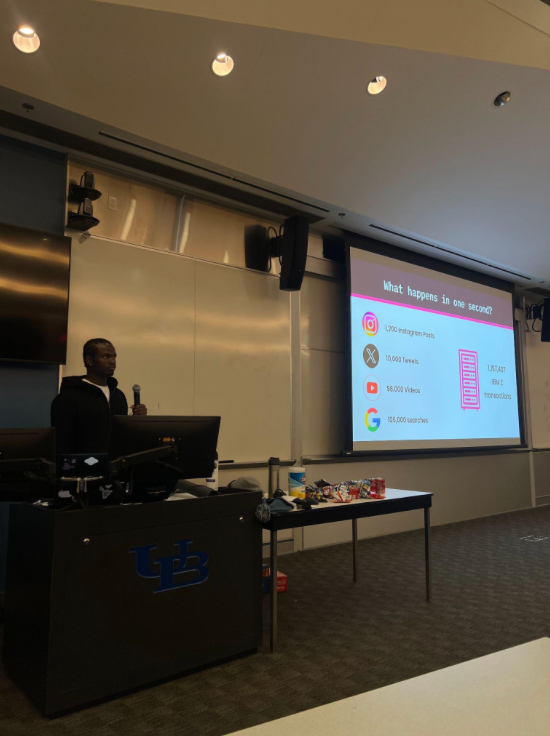
Coming to the United States from my home country, Cameroon, I knew I wanted to accomplish great things in tech. I never imagined I would end up writing a whitepaper about how the mainframe helps achieve digital sovereignty.
I just started the final year of my Bachelor of Science in Computer Science at SUNY University at Buffalo. In the first two years of my program, I built the foundational skills that every computer scientist needs, including different programming languages, algorithmic thinking, data structures, and more. I made it a point of emphasis to explore different technologies and industries during my junior and senior years, which is how I discovered enterprise computing and the mainframe. An IBM Z Ambassador introduced me to IBM Z and, as a tech enthusiast, learning about these systems genuinely blew my mind. My interest grew rapidly, I began diving deeper into the IBM Z ecosystem, and I eventually became an ambassador myself.
How it all started
I came across the Open Mainframe Project’s summer mentorship program the previous year, but lacked the confidence in my knowledge and abilities to apply. It has been one of my biggest regrets since.Fortunately, I redeemed myself this summer by applying to two mentorships. My interview for this project went so smoothly that I had already made up my mind before it ended. The connection with Swathi, my mentor and interviewer, was instant. She articulated her expectations clearly, and we had a long yet engaging discussion about the topic and our respective views on it.
This topic meant a lot to me because I recognize that as a future leader, honing technical skills alone is not enough. I need to develop critical thinking across other domains — ethics, culture, and most importantly the areas this paper addresses: regulations, sovereignty, and resilience. This paper was a valuable opportunity to put into practice the reading and thinking I have been doing around digital sovereignty and geopolitical tensions in tech.
Dive into the paper
The question is increasingly important. Over the past decade, concerns surrounding digital sovereignty and digital resilience have grown significantly among major economies, most notably in Europe. This shift has been reflected in the emergence of policies, regulations, and initiatives such as Gaia-X, which seek to give organizations and governments greater control over their data, infrastructure, and technology. In this context, understanding how established technologies such as the mainframe can contribute to these objectives is increasingly relevant for those making long-term infrastructure decisions.
This paper is primarily intended for decision-makers in critical organizations, technology leaders, and policymakers, particularly those responsible for shaping digital infrastructure and sovereignty strategies at the national or regional level.
Critical editorial choices
- Simplifying the pillars of digital sovereignty
Digital sovereignty refers to the ability to regulate one’s digital future, encompassing infrastructure, software, standards, and data, as well as the regulations and jurisdictions that apply to them. It is a broad concept with many different interpretations and proposed pillars.
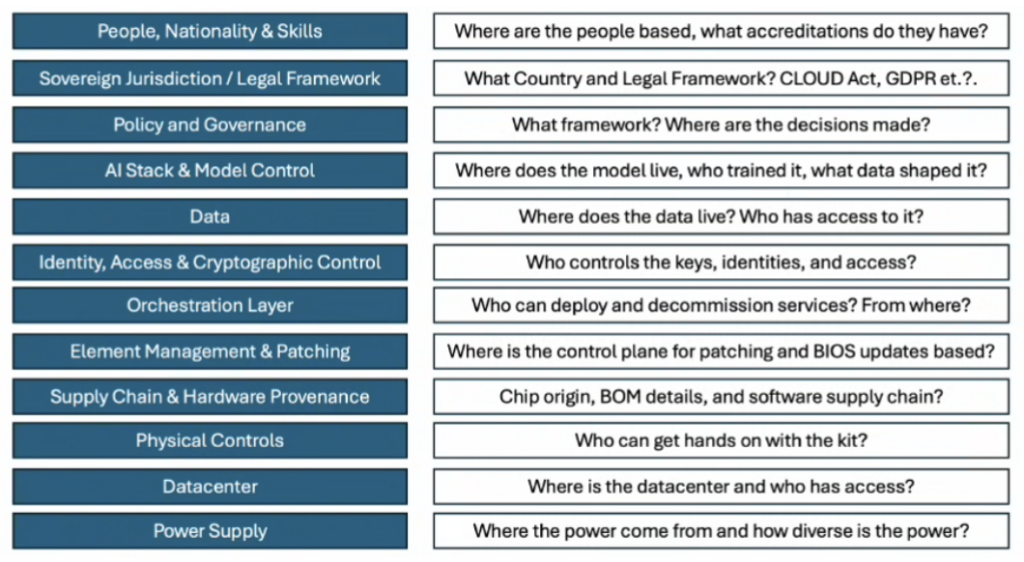
Fig: The 12 pillars of Digital Sovereignty.
(By Steven Dickens, Principal Analyst at HyperFRAME Research)
Rather than attempting to cover every possible dimension, I chose to generalize the discussion into three main categories: Data Sovereignty, Infrastructure Sovereignty, and Technical Sovereignty.
This structure provides a practical framework for comparing the mainframe and public cloud while keeping the analysis focused. Within these three categories, I consider issues such as data protection and localization, control over infrastructure, technology-stack independence, interoperability, and vendor lock-in. This inevitably leaves out some nuances of the broader digital sovereignty debate, but it allows the paper to remain focused on the areas most relevant to enterprise infrastructure.
- Sovereignty requirements differ by region
Another challenge was that digital sovereignty does not mean exactly the same thing everywhere. Different countries and organizations face different regulatory, geopolitical, and technological constraints. For example, the sovereignty requirements faced by an organization in the European Union may differ from those faced by an organization in Canada or another jurisdiction.
Rather than designing a solution around the requirements of one particular region, I focused on general architectural approaches through which mainframes can support sovereign strategies.
Sovereign Hybrid Architectures and Staying in scope
One of the most interesting parts of this research was exploring the different ways that mainframes and cloud environments can coexist. There are many possible hybrid architectures, each serving a different purpose and presenting different trade-offs.
The paper includes a table of several sovereign hybrid architectures, explaining their main purpose, how they work, and their limitations. This was also the part of the research I had the most fun with. There are an enormous number of ways to design a hybrid mainframe-cloud environment, and learning about these different approaches quickly became one of the most interesting aspects of the project. The challenge was staying in scope. I wanted to discuss every architecture and migration strategy I encountered, but not every hybrid architecture contributes directly to digital sovereignty or resilience. I therefore narrowed the discussion to the architectures that most clearly demonstrate how organizations can combine the control and resilience of mainframe infrastructure with the flexibility and scalability of cloud computing, while addressing sovereignty requirements.
Conclusion
I am forever grateful for this opportunity. Thank you to the Open Mainframe Project and my mentors Swathi and Bruno for believing in me. Their guidance and wisdom made this possible; whenever I found myself stuck, they showed me the way forward, and I learned tremendously from both of them.
Thank you as well to the industry professionals who agreed to be interviewed for this paper. Your insights enhanced the depth and realism of the paper. Among others, I would like to specifically thank Joe Gentile, z/OS Performance Analyst at IBM Z; Joan Reester, Mainframe Consultant and formerly with IBM and AWS; and Steven Dickens, CEO and Principal Analyst at HyperFRAME Research.
What’s next for me? I will keep growing as an engineer, continue learning about the Z ecosystem, and look forward to launching my career after my graduation in May 2027.
Stay tuned for more mentee blogs as our Summer Mentorship Program continues!
- Learn more about this year’s summer mentees and mentors
- Watch past mentee presentations on our Mentorship Playlist on YouTube
- Follow our blog for the latest updates from the program
- Connect with us on LinkedIn
- Sign up for our quarterly newsletter
